The South: Negro Music
While we will never know for sure, it is likely that music originally developed (thousands and thousands of years ago) as a means to coordinate and synchronize collective human movement, such as for hunting or farming. Even today, it comes natural to start singing a rhythmic song to accompany the activity of a group of people, whether hiking in the mountains of building a roof. Presumably, great singers held an important social status just like shamans or top hunters. Later, as percussion instruments developed to accompany music, individual percussionists may have also emerged. Then new kinds of instruments, not only percussive, emerged that further enabled virtuoso playing. Sometimes during the evolution of civilizations, "solo music" was invented to admire and appreciate the music of the best singers and instrumentalists. It is likely that, initially, their performances were mainly for the aristocracy and were purely musical. At some point it came natural to merge solo music and solo poetry to entertain the aristocracy (and later the masses) with stories that people were familiar with. During the classic age of Greek theater, these stories became more abstract and metaphorical, and the music became less straightforward. Christianity further bent the purpose of music to sing the praise of the Lord and to call the faithful to prayer. Music, basically, became the vehicle for a message. The message (even when it was an epic) was not just a story, but a whole ideological system.
At some point ordinary people started creating songs for their own consumption, or "folk" songs. These songs were not about heros or God, but about the joys and sorrows of rural life. The music for the aristocracy became more and more sophisticated, both because it could buy the best instruments on the market and because it could hire the best singers and instrumentalists in the kingdom. It came to be called "classical" music. Through the invention of polyphony, it greatly reduced the emphasis on rhythm, which came to be considered a rather primitive and plebean element. On the contrary, folk music relied heavily on rhythm, both for dancing and for singing. Rhythm became, in a sense, the main discriminant between classical and folk music. That was the situation when European music (both classical and folk) arrived to the Americas. In the melting pot of the Americas, Europeans were forced to admit for the first time that there were many different kinds of folk music. While the racial instinct was to separate the western European forms (and the Anglosaxons in particular) from the others, it was only a matter of centuries before the boundaries were blurred. The most traumatic confrontation for Europeans was the existence of African music. Long discarded as an oddity of the animal kingdom (pretty much like the sounds of animals), African music managed to coexist for two centuries next to European music before making inroads into white American society. During the 19th century several elements of African music began to percolate into white folk music. (This phenomenon took place in the Americas. No Afro-contamination took place in European society until much later). Again, rhythm was the key discriminant factor. Rhythm was not an African invention, but certainly the African polyrhythms were wildly different from the linear rhythms of European folk music. The effect of African music on white music was initially barely felt, but it was going to become the main factor fueling innovation. In fact, the folk music of Europeans had barely changed at all over the centuries, but was going to change dramatically (with changes picking up faster and faster speed) once African-American music became to influence it. The fusion of European folk music with African folk music was the most important source of innovation for music in the western world after the Ars Nova. The status of European classical music remained a bit odd. It steadfastedly refused to accept African music (still regarded as some form of inferior animal expression) and all its mulatto offspring. Thus the gap between classical and folk music increased dramatically during the 19th century until the Sixties.
Negro Music: the African Perspective
"African" music is actually quite a pointless term. Music varies across Africa much more than it does across Europe (precisely because no single musical culture came to dominate and spread across the continent). Most slaves traded with the Americas came from West Africa, whose music was completely different from the music of other parts of Africa. It was also quite different from the way European music had developed since Greek times. If the core of European music was to embellish a melody via the counterpoint of a number of melodic instruments, and incidentally set it to a rhythm (which was sometimes specified only in vague terms such as "adagio" or "allegro"), the core of West African music was to color a rhythm via the counterpoint of a number of rhythmic instruments, and incidentally dress it up with a melody. Thus the key elements of West African music were rhythm and timbre, not melody and harmony. Instead of melodic counterpoint, West African music was about rhythmic counterpoint.
Just like European melodism was an extension of the Indo-European language, West African percussionism turns out to be an extension of the West African languages, which are mostly based on timbre and rhythm. West African percussive music was nothing but a simulation of the spoken language. In a sense, West Africans learned how to play music (the music in which rhythmic and timbric subtleties play a key factor) while they were learning to speak. West African percussive music had the same "semantic" value of European melodic music, except that the axis of meaning was perpendicular. Initially the European colonists of the North America had no intention of converting the slaves to Christianity: the fact that the slaves were "pagans" was the moral justification for slavery. They were not "Christians", and in those days "Christian" meant "human". People who were not "Christian" were inferior beings. The Methodist and Baptist revival that started in 1734 with the "Great Awakening" of Massachusetts created a new ideology of slavery: slavery was justified because it was a means to save the pagans from certain damnation. Therefore the conversion of pagans slowly became not only welcomed but even mandatory. Slavery came to be viewed (in fanatically religious quarters) as a crusade for saving souls. The "spirituals" (spiritual hymns) were the first original form of music created by the slaves of North America. The canon developed via the adaptation of African rituals to Christian rituals and via the adaptation of European liturgical music to the musical system of West Africa. Needless to say, the development of negro spirituals picked up speed tremendously when the first black preachers started practicing, because then the preacher and its audience would simply turn their "call and response" relationship into musical interaction. Because blacks were segregated from whites, they had to be given their own preachers (often slaves themselves), who would preach to a black-audience only. In the 1750s black preachers were already ubiquitous. Black congregations were formed in the 1770s. A scale is the ordered sequence of notes used in a musical system. European music used the diatonic scale (divided into eight tones, the eighth being a repetition of the first tone an octave higher), or, better, its extension, the chromatic scale (twelve tones per octave). West African music used a pentatonic scale (that comprises only the first, second, third, fifth, and sixth tones of a diatonic scale). Two scales developed by the merge of European and African music: the deviant pentatonic scale of "spiritual" music and the expanded diatonic scale of "blues" music. All of black music in the USA would develop from these two fundamental scales. The black folk music that was more closely related to its West African roots was the work song. In 1776 the USA declared their independence from Britain.
Negro Music: the European Perspective
The Atlantic slave trade, started by the Portuguese in the 16th century and turned into the engine of North American growth by the British in the 18th century, left the newly born USA with its most embarrassing legacy: one million slaves. By the time of the Civil War, they had increased to more than four million.

The African population posed a moral dilemma to the very religious crowds of European colonists: how to turn the African pagans into good Christians. The missionaries who took on that crucial task were the first white folks to realize the outstanding musical talent of the black race. Where they came from, music was a social phenomenon that accompanied every activity. The same was roughly true of white folk music, but that music survived mainly in poor rural communities. The rich white plantation owners had adopted the stifled musical habits of their European counterparts (music as a formal event), thus repudiating music as a commentary on daily life. The Africans of the plantations hung on to their traditions, and the missionaries found it convenient to adapt the Christian liturgy to the musical mind of the Africans. It became normal for black congregations to accompany sacred ceremonies with music that was, de facto, imported from Africa. For example, the polished, linear vocal harmonies of European singing were replaced by syncopated vocal harmonies with all sorts of rhythmic subtleties. This "spiritual" music was the first instance of African music adapted to the social environment of the New World (in this case, the church, something that did not exist in Africa, and the lyrics of the Gospels). It was not difficult for the individual slave to identify with the martyrdom of Jesus, and for the community as a whole to identify with the odyssey of the Jews.

The other kinds of musical expression, mainly work songs (by "hollers" and "arhoolies", i.e. cotton and wheat pickers) and party dances, were closer to the original music of Africa, because the same activities (work and party) existed in Africa.
Go Down Moses is an example of "jubilee song", songs for the "jubilees", or plantation parties. "Hollers" and "arhoolies" (workers of, respectively, cotton and wheat plantations) developed work songs that were synchronized with the rhythm of work.

All three kinds of music (religious, work and party) shared the same characteristic: they were basically hypnotizing both the singer and the listeners. Whether ecstatic, mournful or exuberant, the music of the Africans tended to be repetitive, rhythmic and deeply felt. Its "hypnotic" effect perhaps expressed the resigned acceptance of a tragic destiny. At the same time, whether ecstatic (religious), mournful (work) or exuberant (party), it was much more emotional than white folk music; a fact that perhaps expressed the hope of a less tragic future. This emotion led to individual improvisation over collective themes. The combined effect of the hypnotic format and the emotional content created loose structures that could extend for indefinite periods of time, in a virtually endless alternation of repetition and improvisation. Three more aspects of black music were innovative for the standards of white music. The rhythm was generally syncopated, and (at the beginning) only provided by hand clapping and foot stomping. The singer employed a broad vocal range and bridged notes in an acrobatic manner, thus introducing a freedom unknown to western harmony. The black equivalent of counterpoint was mostly implemented in the "call and response" format: a leader intoned a melody and a choir repeated it in a different register, and sometimes a different tempo, and often bending the melody slightly. The role of spontaneous improvisation in black music clearly contrasted with the clockwork precision of western harmony. And the open-ended structure of black music contrasted with the linear progression of western music. Originally, slave music was purely vocal. Many blacks of the plantations were skilled fiddlers, but that was a job they mostly performed for the white masters, not for their own community. They played the music for the dancing parties of their masters. The African heritage was mainly preserved in the South. The negroes of the North were much better integrated in white society in the 19th century. For example, the first black theater had opened in New York already in 1821 (the "African Grove", at the corner of Bleecker and Mercer, part of the Greenwich Village, which was then a bit outside New York proper). Francis Johnson was a respected composer of orchestral music in Philadelphia (he performed the first "concert a` la Musard" in the USA in 1838). And Elizabeth Greenfield, also in Philadelphia, became a respected concert vocalist in 1851. It was in the South that the blacks, barred from integrating in the white society, had to "content" themselves with their African traditions.
Theoretically, the civil war that ended in 1865 freed the African slaves, and, in fact, the first collection of negro songs was published shortly afterwards,
Slave Songs of the United States (1867). In practice, it did little to improve the condition of the black mand: same job, same discrimination. Even for the blacks who left the Southern states, the cities of the North promised freedom, but mostly delivered a different kind of slavery. On the other hand, the end of slavery meant, to some extent, the dissolution of the two traditional meeting points for the African community: the plantation and the church. Music remained the main vehicle to vent the frustration of a people, but the end of slavery introduced the individual: instead of being defined by a group (the faithful or the workers), the black singer was now free to and capable of defining himself as an individual. His words and mood still echoed the condition of an entire people, but solo singers represented a new take on that condition, the view of a man finally enabled to travel, and no longer a prisoner of his community, although, sometimes, more lonely. The songs of a negro were the diary of his life (road, train, prison, saloon, sex), often an itinerant life, as opposed to the diary of a community (plantation, church). Solo singers needed instruments. The banjo, an African instrument ("banhjour"), came on the ships. The guitar and the harmonica were adopted from the whites. Eventually, the guitar came to be the second "voice" of the bluesman. Instead of addressing an audience in a church or plantation, and interacting with it, the black songster was interacting with his guitar. The blues became a dialogue between a human being and his guitar. The itinerant black "songsters" of the time of the Reconstruction, armed with the guitar, adapted the songs of the hollers to the narrative format of the British ballad (for example,
John Henry).
Although they were similar in tone, the difference between black and white folk music was profound. They were both realist, but white folk music created "epics" out of ordinary events, while the "blues" was almost brutal in its depiction of real life. The landscape of the blues was one of prisons (
Midnight Special) and dusty roads. "Love" was simply sex, not a romantic emotion. Death was a fact of life, not a step towards eternal life. On the other hand, the existential quality of the music was stronger in the blues. The blues was, first and foremost, a state of mind. No matter how direct, death and sex ultimately harked back to prisons and saloons, which in turn harked back to poverty and misery. The unbridled materialism of the blues was not self glorification but self pity. The blues was, fundamentally, the sense of an unavoidable fate (both individual and collective). The quintessence of the blues was pain, but the art of the blues often consisted in bridging the chasm between tragedy and (broadly speaking) comedy.
Musically, blues music is twelve-bars long in 4/4 time (although this may have been a later development). Its melody is shaped by a scale that is an adaptation of the African five-note scale to the western seven-note scale. Blues music introduced two "flattened" notes, the "blue" notes.
Negro music was originally meant as music for negroes only, not only ignored but often despised by the white community. The demographic movement of the economic boom that followed the reconstruction after the Civil War helped export black musicians and their music to white cities, and tear down some of the cultural walls between the two communities. By far, the elements that sounded most outrageous to white ears were the obscenity of the lyrics and the indecent movements. Sex was the dominant theme of negro ballads, and the lyrics were often explicit. Black songsters liked to boast about their sexual performances. This was not so much an African tradition as a plantation tradition: the slave holders used to encourage extramarital intercourse among slaves, because Thus black people came from environments in which sexual promiscuity was more than tolerated: it was ordinary life. The other "indecent" element was the Christian ceremonies that looked more like pagan ceremonies, in which loud and inebriating singing mixed with hysterical dancing and orgasmic howling. Black churches encouraged the exhibition of mystic fervor through savage body language, but white folks saw it as evidence that blacks were not civilized beings.
As blues music was heard and "consumed" by white folks, it became more aware of its own meaning. It also had to somehow "hide" that meaning (e.g., the sexual one), that was not compatible with the values of white society. Thus the bluesmen developed indulged in "double talk" to confront themes that white people shunned. The blues became more metaphorical and allegorical (
Bollweavil Blues,
Stewball,
Uncle Rabbitt,
The Grey Goose). As ghettos sprouted up in all big cities, the topics of blues music adapted to the urban landscape, and began to depict life in the ghetto. But blues music was never meant to reflect the rhythm of urban life. De facto, the ghetto remained unsung till the 1970s, when rap was born. The first venue for negro music was the "medicine show", the itinerant variety show that accompanied the "doctors" in their quest for gullable customers (thus the slang term "physick wagon"). The "doctors" used negro musicians, actors and dancers as cheap entertainment to draw an audience to their sales pitches. Eventually, the "medicine show" became an art in itself, that toured several counties and even states, often augmented with magicians, acrobats, etc. In Memphis in 1907 the first permanent theater for medicine shows was set up by Fred Barrasso. This led to the formation of the T.O.B.A. ("Theater Owners Booking Association"), a network of theaters specializing in negro shows. Those negro musicians, abused and underpaid by their employers, were nonetheless the first black professional entertainers. Minstrel shows, although run by white entertainers, began to hire black singers after the Civil War, and eventually became mainly black. White enterpreneur John Isham organized the first itinerant black revue (basically, a better organized minstrel show), "Jack's Creole Burlesque Company", in 1890. One such revue even toured Europe in 1897. These revues maintained the three-part format of the minstrel show (opening skit, specialty acts and finale), but were, for all practical purposes, variety shows with orchestras and choirs.
New York: the Birth of a Black Nation
The turmoil in music reflected the emergence of black intellectuals that challenged the stereotypes of white culture. At the end of the Civil War, the biggest problem faced by the USA was how to deal with the millions of uneducated blacks, who were still dependent on white people for their livelihood. For example, in 1867 a white abolitionist of Nashville (Tennessee), Clinton-Bowen Fisk, founded Fisk University with the aim of educating the former slaves and their children. After the death of Frederick Douglass, the only major black figure of the abolitionist era (an escaped slave who supported both John Brown and Abraham Lincoln), Booker-Taliaferro Washington, the son of a Virginia slave, became the leading black intellectual of the Reconstruction era. He believed that education would give blacks a chance in the American society. In a 1895 speech, he called on blacks to accept segregation and to invest in their future, so that some day blacks would be equal to whites. But a decade later along came William-Edward-Burghardt DuBois, who instead organized the "Niagara Movement" in 1905 with the explicit aim of creating a platform to fight segregation. When, in 1909, several white and black activists founded the "National Association for the Advancement of Colored People" (NAACP). Du Bois became one of its leaders. The problems faced by the black community in those days were quite basic: white communities were expelling and lynching blacks by the hundreds (at the peak, in 1892, more than 200 blacks were lynched in one year). In 1916, Jamaica-born Marcus Garvey moved to New York and lauched a new black nationalist and separatist movement. Unlike his predecessors, he believed that black civilization was actually superior to white civilization, and that blacks should return to Africa. Thanks to the efforts of the previous decades in educating blacks, the 1920s witnessed a "Harlem Renaissance", led by blacks such as poet Langston Hughes. Music was only one realm in which black culture was being accepted during the 1920s. The commercial recording of black music was a direct consequence of this "black renaissance". Realizing that black artists were becoming a lucrative business (Scott Joplin in ragtime, William Handy in blues, Eubie Blake in pop, Louis Armstrong in jazz), and that record labels were still reluctant to let black artists make records, Atlanta's black songwriter Harry Pace (a former partner of William Handy) opened in Harlem his own label, "Pace Phonograph Company" (later "Black Swan Records"), in 1921, employing a young Fletcher Henderson as the studio pianist. Pace's success was such that white-owned labels such as Paramount (Alberta Hunter, Ida Cox, Charley Patton, Blind Lemon Jefferson) and Columbia (Bessie Smith, Ethel Waters) started competing fiercely for black recording artists, and that in 1924 Paramount bought the Black Swan catalog altogether. Black Swan's brief adventure legitimized the black recording artist, and opened the floodgates to the recording of black music throughout the country.
New Orleans, Kansas City, Memphis
The urban development of black music in the 20th century owed a lot to the sin cities of the south: New Orleans, Kansas City and Memphis. Their saloons, clubs, brothels, steamboats and speakeasies sponsored countless black musicians who migrated from the countryside. New Orleans, at the mouth of the Mississippi river, the old French city that had exhibited an amoral opulence before the Civil War, was a melting pot with no equals in the south (Blacks, Italians, Caribbeans, French-speaking white and black Creoles, native Americans, Mexicans, and descendants of the Europeans). Its port was an infinite source of cultural exchanges with the rest of the world. Like most seaports, New Orleans boasted a colorful night life of prostitution, gambling and entertainment ("dixies"); and the "laissez faire" (laid-back) attitude of the Caribbean-French population made it even more tolerant than most seaports. Untouched by the industrial revolution and less socially stressed than other plantation-oriented economies, New Orleans was able to retain the traditions of the various ethnic groups while they were rapidly being annihilated in the rest of the USA. Exoteric rituals, tribal dances, pagan festivals, funeral marches and all sorts of parties continued to exist well into the 20th century. Its "Mardi Gras" carnival was a hybrid musical celebration that mixed African, French and Native traditions in its colorful parades and marching bands. New Orleans, a commercial city, was more tolerant towards the blacks than the other southern cities. When the blacks were emancipated, it was a much friendlier place to be for a black musician than most of the South. In 1897 the puritan government of the city had created "Storyville", the red-light district, nicknamed after the politician who had the idea, a district that quickly became a city within the city. Since most establishments had a musician entertaining the customers, "Storyville" became the biggest employer of black musicians outside of Broadway. When "Storyville" was shut down in 1917, black musicians spread all over the country, bringing with them bits and pieces of New Orleans' sound. One of New Orleans' bands, the Original Creole Band, exported a new kind of music that would be called "jazz". Kansas City had experienced its first wave of black immigrants after the disputed presidential elections of 1877, that basically killed any remaining hopes of sincere black integration in the South. Blacks from states such as Louisiana and Mississippi emigrated by the thousands towards more tolerant places such as Kansas City. During the corrupt reign of Tom Pendergast (from 1925 till 1939, when he was convicted of tax evasion), the illegal clubs of Kansas City flourished, virtually mocking the "Prohibition" of alcohol (1920-33). The booming industry of alcohol and gambling turned out to be a bonanza for black musicians, who became the backbone of the entertainment machine. Memphis, an important inland port on the Mississipi and an important railway node between New York and Chicago, made wealthy by the cotton industry, was the natural link between the rural South and the industrial North. Memphis was often the first step on the way out of the plantations for the blacks who wanted to migrate north. Many of them ended up playing or singing on Beale Street, the center of the night life. When nylon replaced cotton, Memphis began to decay, and blacks joined the mass migration towards Chicago, the next major stop on the railway.
The Delta: Blues Music
Blues music was the antithesis of city life, but the early recording of blues music was a New York affair.

Several blues stars (Bessie Smith, Ma Rainey, Ida "Cox" Prather) started out in minstrel shows, and then simply migrated from the itinerant shows of the South to the permanent vaudeville theaters of New York, where their songs were written specifically for a broader audience by professional black songwriters such as William Handy, based in Memphis, who "composed" (but maybe simply published) several of the early "classics":
Memphis Blues (originally written in 1909 for a political campaign, but published only in 1912),
St Louis Blues (1914),
Beale Street Blues (1916),
Loveless Love (1921),
Harlem Blues (1923),
Careless Love Blues (1925). Handy was fully aware that he had "invented" a new musical genre, as he wrote in 1916: "I have added another form to musical composition and to the world". He realized that the key feature of blues music that made it unique was that it was about sorrow, not about joy. Handy made his own recording of these compositions with his Memphis Blues Band between 1917 and 1923. The orchestra featured trombone, clarinet, alto sax, violins, piano, tuba, string bass, drums and xylophone. He had clearly introduced elements of western harmony in the original blues (for example, one can detect a sixteen-bar tango within
St Louis Blues). Handy also recorded one of the first songs with "jazz" in the title:
Jazz Dance (1917).
The twelve-bar structure that eventually became the standard was an invention of these urban songwriters: the original blues music was largely free form. The blues singers bridged different realms of black music, bringing together the styles and practices of the minstrel shows, of the vaudeville theaters, of ragtime and of their native rural environments. The first blues songs to be published, in 1912, were
Baby Seals Blues, written by ragtime artist Artie Matthews, and
Dallas Blues, written by white songwriter Hart Wand.

Ohio-born Mamie Smith (not truly a blues singer, although black) sang two blues numbers written for her by black songwriter Perry Bradford:
That Thing Called Love (february 1920), the first record by a black female artist, and
Crazy Blues (august 1920), the first blues to become a nation-wide hit (with Willie Smith on piano). It sold 200,000 copies the first year. She was accompanied by the Jazz Hounds, that featured Memphis trumpeter Johnny Dunn, the first master of the plunger mute. Before Smith's hit, blues music only catered to the underworld of brothels and vaudeville theaters. Afterwards, blues music became as "respectable" as the black syncopated orchestras, despite the fact that it was a music about sorrow instead of joy. The idea of that record was largely due to its black producer, Alabama-born pianist Perry Bradford, a veteran of the minstrel-show circuit and now a songwriter, author of
Lonesome Blues (1918), who had just composed the blues-based revue
Made in Harlem (1918), that had starred Mamie Smith. He revised James Johnson's
Mama's And Papa's Blues as
Crazy Blues, architected the "respectable" sound of the record (different from the "wild" live sound of the Jazz Hounds) and convinced the label (Okeh) to release the first blues record by black musicians. In 1921 Okeh introduced a "Colored Catalog" targeting the black community, the first series of "race records". Alberta Hunter, from Memphis, followed suit in 1921 with
How Long Sweet Daddy and had a hit with
Gulf Coast Blues (1922) before joining the jazz orchestras.

Bessie Smith, from Tennessee, made her first record in february 1923 (Alberta Hunter's
Down Hearted Blues accompanied by Clarence Williams on piano and Williams' own
Gulf Coast Blues), which became an instant hit, and in january 1925 she cut her version of
St Louis Blues with Louis Armstrong on cornet. She was instrumental in both sculpting a powerful, emotional vocal style and in bridging the worlds of blues, pop and jazz. The musicians who played with her had to develop new styles of playing. Ted Wallace's
House Rent Blues (july 1924) contrasted her with Fletcher Henderson's piano and Charlie Green's trombone. Pam Carter's
Weeping Willow Blues (september 1924) featured piano, trombone and Joe Smith imitating Smith's vocals on cornet. William Handy's
Careless Love Blues (may 1925) relied on a dialogue with Louis Armstrong's cornet that seems to "sing" as much as the singer. Ragtime pianist James Johnson accompanied her in the 32-bar song
Peachin' The Blues (february 1927) and especially in
Backwater Blues (february 1927). Her interpretation of James Johnson's
Empty Bed Blues (march 1928) lasted six minutes (two sides of a 78-RPM record) with accompaniment of piano and trombone. The filmed 17-minute version of
St Louis Blues (1929), sung by Bessie Smith with Louis Armstrong on cornet and James Johnson on piano, with an all-black cast and directed by Dudley Murphy, who had directed
Le Ballet Mechanique (1924), may be considered the first music video. Gertrude "Ma" Rainey, from Georgia, debuted in 1923 and the following year delivered
Blame It On The Blues and
Night Time Blues, both written by pianist Thomas "Georgia Tom" Dorsey and accompanied by his Wildcats Jazz Band, and then
See See Rider (recorded in october 1924 with Louis Armstrong on trumpet and Fletcher Henderson on piano). The first real star was perhaps Ethel Waters, from Los Angeles, who was first recorded in 1921 and featured in several musical comedies, and eventually obtained her own itinerant revue ("The Ethel Waters Vanities") and became a celebrity. All of them had moved to New York, and none of them was a real blues musician (an itinerant, street performer from the South). The "classic blues", as it came to be called, was not classic, and was not even blues. Alberta Hunter's most famous number,
Nobody Knows the Way I Feel This Mornin' (1924), was a ballad backed by Louis Armstrong and Sidney Bechet, two jazz musicians. The bluesmen were starving in the South while the "classic" blues singers were getting rich in New York. These "classic" singers were almost all women, in the tradition of the old vaudeville shows. Their style was more polished, structured (twelve bars, no less and no more) and arranged (they fronted a band instead of playing the guitar). The first records featuring a blues guitar were Sylvester Weaver's instrumentals
Guitar Blues/ Guitar Rag (1923), although the B side was played on a guitar-banjo, recorded in Louisville (Kentucky), and Charlie Jackson's
Papa's Lawdy Lawdy Blues (1924), recorded in Chicago. Charlie Jackson's
Shake That Thing (1925) was the first hit by a self-accompanied bluesman. (Jackson actually played a six-string banjo). One of the few female composers, Texas blueswoman Victoria Spivey recorded in St Louis, accompanying herself at the piano, her own
Blue Snake Blues (1926),
Arkansas Road Blues (1927), with Alonzo "Lonnie" Johnson on guitar,
Dope Head Blues (1927),
T.B. Blues (1927),
Toothache Blues (1928), a duet with Johnson, and
Moaning Blues (1929). The country blues was initially heard in an "arranged" version, performed by "string bands" such as Bo Carter's. String bands had been common in plantations at the turn of the century for entertaining the masters. The popularity of the original bluesmen dates from much later. In 1926 Blind Lemon Jefferson became the first real bluesman ("country" bluesman) to enter a major recording studio. It was the beginning of a trend: record labels would go and look for talents in the Mississippi Delta region, bring them to the city, dress them up and send them to stage backed by a jazz combo. The blues music that white audiences heard in those days bore little resemblance to the blues music that was heard by black audiences in the "barrelhouses" and "juke points" of the South. Their songs were curtailed to three minutes because the 78 RPM record could hold only that much music. Their lyrics were censored to avoid any reference to sex. Their performance was constrained to sound as close as possible to the style of white singers. The African elements (the polyrhythms, the antiphonal singing, the vocal range) were diluted or avoided altogether. Many bluesmen of the South were too poor to buy instruments. They learned how to make music out of washboards, kazoos and jugs.
Hometown Skiffle (1929), one of the earliest "samplers", coined the word "skiffle" to refer to such music. The record labels found out that there existed a market for "race records" among the liberal white audiences and the small black middle-class of the big cities, particularly New York and Chicago. The term "rock'n'roll" might be as old as any of these historical events. Trixie Smith cut
My Man Rocks Me With One Steady Roll (1922) four years before Chuck Berry was born. In 1934 John Lomax and his son Alan began recording black music of the southern states, and discovered the gospel genre of "rocking and reeling" that had been around for years, if not decades. Despite being much older, the country blues of the Mississippi Delta region, south of Memphis, was recorded after the classic blues had already become a sensation in the big cities of the north. The country-blues style had no jazz combo: only a guitar and a harmonica. The most influential in Mississippi were:

Charley Patton, a werewolf-like vocalist and sophisticated slide guitarist (two gifts that made his style the most fluid vocal-guitar duet of blues music) who wrote the classics
High Water Everywhere (october 1929),
Pony Blues (june 1929),
Prayer of Death (june 1929),
Moon Going Down (june 1930); Eddie "Son" House, another powerful vocalist who in 1930 recorded, as two-sided 78 RPM records, lengthy ballads such as
Preachin' The Blues and
My Black Mama, With guitarist Willie Brown and pianist Louise Johnson; Tommy "Snake" Johnson, an acrobatic vocalist who wrote
Canned Heat Blues (1928),
Big Road Blues,
Cool Drink of Water Blues and
Maggie Campbell (all recorded between 1928 and 1929, his only recording dates); Nehemiah "Skip" James, who introduced a less rhythmic, folkish style in
Devil Got My Woman (1931), learned from his guitar teacher,
I'm So Glad (1931) and
Cypress Grove (1931); and "Mississippi" John Hurt, one of the first to enter a recording studio, with
Avalon Blues (1928) as well as his adaptations of
Candy Man Blues (1928) and
Nobody's Dirty Business (1928), and one of the most archaic in style, but then forgotten for 34 years.

St Louis' multi-instrumentalist Alonzo "Lonnie" Johnson, one of the first black instrumentalists to make a record, used the violin in
Falling Rain Blues (1925), and occasionally played the piano, but made his name with the "singing" (vibrato-laden) guitar lines that accompanied most of his blues and gospel numbers, such as
Dark Was The Night Cold Was The Ground (1925),
Woman Changed My Life (1926),
You Don't See Into the Blues Like Me (1926),
I Have No Sweet Woman Now (1926),
Lonesome Jail Blues (1926),
Love Story Blues (1926),
Blue Ghost Blues (1927),
Life Saver Blues (1927),
Away Down In The Alley Blues (1928),
Steppin' On The Blues (1930), plus
Blue Blood Blues (1929) and
Jet Black Blues (1929) recorded with Eddie Lang. His style (and his collaborations with jazz guitarist Eddie Lang) was instrumental in bringing together blues, jazz and pop. Memphis (Tennessee) had Walter "Furry" Lewis, one of the first to play the slide guitar with a bottleneck, whose
Mr Furry's Blues (1927) and
Cannonball Blues (1928) predated even Patton; and "Sleepy" John Estes, one of the most popular bluesmen since he debuted in 1929, his biggest success probably
Married Woman Blues (1935).

Texas boasted Blind Lemon Jefferson, the most versatile interpreter, a master of both dramatic recitation and guitar accompaniment who penned
Bad Luck Blues (1926), Spivey's
Black Snake Moan (1926),
Matchbox Blues (1927),
Booger Booger (1927), that transposed the left-hand piano boogie figures to the guitar,
See That My Grave's Kept Clean (1927), and
Penitentiary Blues (1928) but died in 1929 (the year that country blues became a brief fad); "Texas" Alger Alexander, a baritone who, unable to play the guitar, employed guitarist Lonnie Johnson and was the first to record the traditional
House Of The Rising Sun (1928); "Blind" Willie Johnson, the greatest interpreter of religious music, who penned
Jesus Make Up My Dying Bed (1927),
Dark Was The Night (1927) for solo guitar and wordless humming, and
Keep Your Lamp Trimmed and Burning (1928); Huddie "Leadbelly" Ledbetter, discovered in 1933 in a prison by Alan Lomax, later a celebrity of New York's folk revival and thus the symbolic bridge between black and white folk music, who popularized Gussie Lord Davis'
Goodnight Irene (1933),
Midnight Special (1934),
Rock Island Line (1936),
Pick A Bale Of Cotton (1940) and
Cottonfields (1941); and Mance Lipscomb (discovered only in 1959). Atlanta's "Blind" Willie McTell developed a dazzling technique at the 12-string guitar that sounded almost polyphonic, and composed songs influenced by white folk music such as
Writin' Paper Blues (1927),
Statesboro Blues (1928),
Travellin Blues (1929) and
Dying Crapshooter Blues (1940). Georgia's guitarist Arthur "Blind Blake" Phelps was fluent both in blues music, as in
West Coast Blues (1926), that featured the line "we're gonna do that old country rock", and in ragtime music, as in
Southern Rag (1927). Alabama's pianist Charles "Cow Cow" Davenport recorded
Cow Cow Blues (1928), another precursor of boogie woogie, and, generally speaking, helped coin a blues style at the piano. Furry Lewis, John Hurt and Charley Patton were the guitarists who invented the "finger-picking" style of guitar playing (basically, imitating the structure of ragtime piano on the strings of the guitar, with the thumb strumming the strings to provide the rhythmic equivalent of ragtime's left hand, and the other fingers carrying the melody).
North Carolina's guitarist Elizabeth Cotton/Cotten developed a left-handed style (plucking the melody with her thumb on the high strings) and demonstrated it in her
Freight Train (1958), composed at the age of 11 (in 1906) but recorded only at the age of 63. Blues music was mainly vocal (it's whole reason to exist was in the lyrics), but the instrumental styles developed to accompany it would be no less influential on the future of popular music. Between 1926 and 1929, several of the legends of the Delta had been recorded. During the Depression, negro music continued to spread. But the social setting was changing dramatically, thanks to the ghettoes that had grown exponentially after the first world war: Harlem in New York and South Side in Chicago. The most successful black singer of the 1930s was Tennessee's Leroy Carr, also a pianist who formed an influential duo with guitarist Scrapper Blackwell (the main guitar stylist of the era with Lonnie Johnson) for
How Long How Long (1928), a song that broke the established rules of blues music (both vocal and instrumental), while his existential angst permeated the solo blues
Six Cold Feet In The Ground (1935) and the tuneful
When The Sun Goes Down (1935). Another piano-guitar duo became a staple of the clubs of St Louis: demonic vocalist and pianist Peetie Wheatstraw (William Bunch) and guitarist Charley Jordan. Between his debut in 1930 and his death in 1941, Wheatstraw was one of the most popular and prolific bluesmen. One of the great stylists of the blues was South Carolina's itinerant blind guitarist Gary Davis, who already in 1935 created a soulful fusion of blues and gospel, later perfected in
I Cannot Bear My Burden By Myself (1949) and
Keep Your Lamp Trimmed and Burning (1956), but didn't achieve recognition as an innovative guitarist until he turned sixty, with
Cocaine Blues (1957),
Candy Man (1957) and the instrumentals
Buck Dance and
I Didn't Want To Join The Band (1957), all off his seminal album
Pure Religion and Bad Company (1957),
Death Don't Have No Mercy (1960) and
Lovin' Spoonful (1965). He played the guitar like he played the piano, and was not afraid of complex tunings, minor keys and dissonance, of mixing ragtime, country and marches with blues chords. His fellow countryman Blind Boy Fuller (Fulton Allen) was influenced by Davis' guitar style, and his
Rattlesnake Daddy (1935),
Big Leg Woman Gets My Pay (1938) and
Step It Up And Go (1940) harked back to the pre-blues era.

A watershed year is 1936, when Mississippi bluesman Robert Johnson cut his first record. A legend who lived only 27 years and recorded only 29 songs, but enough to establish a new (chilly and fatalistic) standard of delivery and accompaniment, Johnson perfected the styles of Charley Patton and Son House (and the guitar style of Lonnie Johnson) in the harrowing
Terraplane Blues,
Cross Road Blues, the bleak
Stones In My Passway,
Come On In My Kitchen (with his best bottleneck workout),
Love In Vain (modeled after Leroy Carr's
When The Sun Goes Down),
Dust My Broom, and the lyrical
Hellhound On My Trail (all recorded in 1936-37), Booker "Bukka White" Washington was perhaps the last of the great Mississippi singer-guitarists, immortalized by
Shake 'Em Down (1937) as well as
Fixin' to Die (1940) and
Parchman Farm Blues (1940), with Washboard Sam. In 1939 Leo Mintz opened a record store in Cleveland, the "Record Rendezvous", that specialized in black music and was serving a white audience: black music found an audience beyond the ghetto.
Chicago: Urban Blues
The year 1916 was the year of the mass emigration of blacks from the South to the North. By the time the Depression stopped the flood, thousands of musicians had moved north, and transplanted their music (whether blues, spiritual or jazz) into the northern cities. Urban blues was played in the "honky-tonks" (clubs that were serving alcohol illegally) and in the "gutbuckets" and other kinds of private parties. Urban blues was generally more aggressive, not so much because of the urban spirit but because of the noise that the bluesman had to compete with in those locales. The "Prohibition" probably helped replace classic blues with urban blues: classic blues relied on legal establishments, that had to close or change clientele, whereas urban blues was happy to serve the rough and wild clientele of the illegal establishments. All of the Chicago protagonists were born in the South, mostly in Mississippi. The star of Chicago, known also among white audiences as far as New York, was Big Bill Broonzy, who, arriving in 1928, chronicled the epics of city blacks in a long series of eclectic recordings, including:
Big Bill Blues (1928),
Starvation Blues (1928),
Keep Your Hands Off Her (1934),
Too Many Drivers (1939),
Key to the Highway (1941). The city performers introduced significant innovation in the instrumentation of blues music. For example, the piano became as commonplace as the guitar.

The most famous (and the first virtuoso) of the bottleneck/slide guitarists was Houston "Tampa Red" Woodbridge, who arrived in Chicago (from Florida) in 1925 and was one of the first black instrumentalists to make a recording. Unlike other southern bluesmen, whose playing was modal and in minor keys, Tampa Red's shimmering, clean style was influenced by ragtime and jug bands. His prolific career include
Through Train Blues (1928), with Frankie Jaxon on vocals,
It's Tight Like That (1928), a duet with vocalist Thomas "Georgia Tom" Dorsey and a massive hit,
Come On Mama Do That Dance (1929), with the Hokum Jug Band (Jaxon on vocals),
Sugar Mama (1935),
It Hurts Me Too (1940). Lonnie Johnson, Scrapper Blackwell and Tampa Red make up the triad of guitar stylists that determined the evolution of the instrument from little more than a rhythmic add-on to a full-fledged emotional tool. In fact, these three guitar wizards were responsible, more than anyone else, for making the guitar sound like a human voice. They cast a long shadow on all blues guitarists that came later. Another virtuoso of the bottleneck guitar was Kokomo Arnold (in Chicago since 1930), who popularized
Milk Cow Blues and
Sweet Home Chicago (1930). Big Joe Williams debuted with his
Highway 49 Blues (1935) and the traditional
Baby Please Don't Go (1935), arranged with fiddle and washboard, and then recorded
Crawlin' King Snake (1941) with Sonny Boy Williamson on harmonica. There was also a female guitarist, Lizzie "Memphis Minnie" Douglas, who arrived in Chicago in 1933, after recording
When The Levee Breaks (1929) and
Bumble Bee (1930) in Memphis, and converted to the urban style of Big Bill Broonzy with
Nothing In Rambling (1940) and her signature song,
Me and My Chaffeur Blues (1941). The first great barrehouse pianist was Roosevelt Sykes Bey, who moved to Chicago in 1929 and coined a rhythmic, pseudo-boogie style with
44 Blues (1929),
The Night Time The Right Time (1936) and
Driving Wheel (1949). The other great barrelhouse pianist was Eurreal "Little Brother" Montgomery, arrived in 1928 from New Orleans, who debuted with
Vicksburg Blues (1930). In those days, barrehouse pianists were the equivalents of juke-boxes. Sykes and Montgomery were the first to introduce a personal style. Sykes' disciple Memphis Slim (Peter Chatman), who reached Chicago in 1939 and had a hit with
Beer Drinking Woman (1940), went on to form (1944) his Houserockers, who recorded
Rockin' The House (1947) and
Nobody Loves Me (1948, also known as
Everyday I Have The Blues). John Lee "Sonny Boy" Williamson (who moved to Chicago from Tennessee in 1937) integrated the blues harmonica into the blues singing, so that the two became one continuous voice. His
Skinny Woman (1937),
Good Morning Little Schoolgirl (1937) and
Hoodoo Hoodoo (1946) became standards of a more rhythmic kind. During the same period, Robert "Washboard Sam" Brown (who moved to Chicago in 1931) popularized one of the most humble of African-American instruments, the washboard. Arriving in 1941 from Memphis, tenor Johnny Shines, who wandered with Robert Johnson, had to wait many years before his compositions, such as
Joliet Blues (1946), were recorded. Thundering vocalist and versatile pianist Albert "Sunnyland Slim" Luandrew, who moved from Mississippi to Memphis to Chicago (1942), was immortalized in
Sunnyland Train (1929, but first recorded in 1951),
Johnson Machine Gun (1947), with the young Muddy Waters on guitar,
The Devil Is a Busy Man (1948),
Brownskin Woman (1948),
Shake It (1951).
The main difference between the blues of the Delta and the blues of Chicago was that the former was mainly solo, while the latter was increasingly relying on a band format (guitar, harmonica, piano, drums, bass) Ironically, blues music did not become popular among black people until the 1930s. The paying audience of a bluesman was usually a white audience, not a black audience. This was partly due to the fact that only whites were admitted to the clubs that sponsored the phenomenon, but also to the fact that blacks probably did not perceive the blues as entertainment. If a black had to pay a ticket, he would probably rather pay for a more lively kind of entertainment. Blues music was born and continued to thrive because white people liked it. And it spread across the country thanks to an indirect flow of money from the white middle class to the black ghettos via the music industry. During the 1910s blacks did not dream of becoming bluesmen: some of them "were" bluesmen, some were not. By the end of the 1930s playing the blues had become a honorable profession and many blacks aimed at starting a blues career.
Chicago: Gospel Music
TM, ®, Copyright © 2003 Piero Scaruffi All rights reserved.
While religious music was definitely a strong part of the lives of black slaves, there was actually a difference between what blacks sang in churches and what they sang outside. Most plantations had "praise houses" for the slaves to gather, pray and sing. Negroes also met in "camp meetings", that were largely outside the control of white people. In these places, the negroes sang lyrics that had references to their conditions of slaves, and they danced as well (something that the churches did not quite tolerate), and they were free to indulge in their "savage" repertory of shouts, hand clapping, foot-stomping, etc. They also came to be centered on the call-and-response interaction between preacher and congregation. It was relatively easy for negroes to identify with the Jews of the Bible: negroes too had been deported, and they too aspired to a homeland, a promised land (in fact the country north of the Ohio River, where negroes where free, was nicknamed "Jordan"). Several spirituals referred to the journey to freedom via the "Underground Railroad" (a secret network of abolitionists who helped blacks escape to the North) as the equivalent of the Jewish journey from Egypt to Palestine. A black woman named Harriet Tubman who worked for the "Underground Railroad" was referred to as "the Moses of the blacks". Songs such as We Shall Overcome were explicit about their real subject: freedom on this Earth, not only in Paradise.

Negro religious hymns ("spirituals") such as
When The Saints Go Marching In were among the oldest inventions of African-American music. In the years following the Civil War, they were popularized by the Fisk University Jubilee Singers, an "a cappella" group that in 1871 traveled throughout the USA and even abroad to collect funds for the university (one of the first black universities). Other universities followed suit (e.g., the Hampton Singers in 1873 at Virginia's Hampton Institute). The process of black urbanization had also an impact on sacred singing. In the Baptist churches, the archaic form of spirituals that accompanied collective prayers evolved into the "gospel song". The main differences were the piano (spirituals were sung "a cappella") and the lead vocals, that were now taken on by the preacher himself. The effect was to reduce the freedom of the "performers". Originally the piano was meant to simply provide the rhythm but soon became a creative factor in itself, used to fill the pauses in the singing with all sorts of embellishments (arpeggios, glissandoes, etc). The demand for gospel hymns created a market for hymn writers, who specialized in adapating all sorts of melodies to the purpose of worshiping God. Gospel music was popularized by Thomas Dorsey, the black Chicago pianist and songwriter, a former Atlanta vaudeville and barrelhouse pianist, as well as leader of the Wildcats Jazz Band that accompanied "Ma" Rainey in
Blame It On The Blues (1924) and
Night Time Blues (1924). Dorsey, who had already composed several "gospel" songs such as
If I Don't Get There (1921) and
If You See My Savior (1926), transported blues musicianship into the church. He also formed the first female gospel quartet and assembled the first large-scale gospel chorus (1931), struck gold when he composed
Precious Lord (1932) and organized the first "National Convention of Gospel Choirs and Choruses" (1932). After this song became a hit (in 1937), Dorsey spent his life traveling from church to church, peddling his repertory of gospel songs, that also included
There'll Be Peace In The Valley (1937) and
Search Me Lord. In 1928, Mahalia Jackson was one of the singers who started their careers performing Dorsey's songs. And James Cleveland was among the first to hear Dorsey's choirs. In the year 1930, the "Jubilee Meeting" of the National Baptist Convention included the first performance of gospel songs, and thus allowed the genre to come out of the ghettos. However, gospel music was still strictly for churches. It was only later, in the 1930s, that some performers began to "export" gospel music to the night clubs. Notable among them was the thundering "Sister" Rosetta Tharpe, who appeared at the "Cotton Club" and who recorded Thomas Dorsey's
Rock Me (1938), considered the first gospel record,
I Looked Down The Line (1939),
This Train Is Bound For Glory (1939),
Shout Sister Shout (1941). Throughout the 1930s, the preferred format remained the quartet, and the preferred style the "jubilee" (the standard set by the Fisk University Jubilee Singers): the Heavenly Gospel Singers (that recorded Thomas Dorsey's
Precious Lord); the Dixie Hummingbirds, formed in 1928 in South Carolina (
Joshua Journeyed to Jericho, 1939;
Jesus Walked the Water, 1952); the Golden Gate Quartet, formed in 1934 in Virginia, a veritable orchestra simulated with vocals (
Jonah, 1937;
Rock My Soul, 1939); the Chuck Wagon Gang of Texas that debuted in 1936; the Five Blind Boys of Mississippi, formed by blind students in 1944 and led by the delirious tenor of Archie Brownlee (
Our Father, 1951). Male groups wore formal suits (such as tuxedoes) and beat the rhythm with finger snapping. Female groups wore church dresses and beat the rhythm with hand clapping. The latter were more likely to be accompanied by an organist. The sound of the gospel quartet had an influence on the parallel development of the pop vocal groups.

Starting in 1925 in Ohio the Mills Brothers became a local sensation by recreating instruments with the voices, while usually limiting the accompaniment to a guitar. They were among the first performers to rely on a studio device (the microphone) for the sound of their music. They relocated to New York in 1930, where they continued to "impersonate" jazz music. Their interpretations of Nick LaRocca's
Tiger Rag (1931),
Goodbye Blues (1932),
Dinah (1932), with Bing Crosby, Elmer Schoebel's
Bugle Call Rag (1932), Hoagy Carmichael's
Lazy Bones (1934),
Paper Doll (1943), that remained perhaps their signature song, Doris Fisher's
You Always Hurt the One You Love (1944) and
The Glow Worm (1952) were mellow sentimental ballads that redefined black music for the broader audience. They popularized the "barbershop harmonies", a sweet and romantic mutation of the jubilee quartets which would become the reference standard for all future vocal groups. The Spirits Of Rhythm were a jazzier version of the Mills Brothers (they were a string band, not just a vocal group) and featured (since 1929) the acrobatic scat singing of Leo Watson derailing conventional pop material such as Harry Revel's
Underneath The Harlem Moon (1932) and Gus Kahn's
Nobody's Sweetheart (1932). The Ink Spots, even more compromised with white pop music, crafted melodies such as
If I Didn't Care (1939),
Address Unknown (1939),
We Three (1940),
Into Each Life Some Rain Must Fall (1944) and
I'm Making Believe (1944) with Ella Fitzgerald,
To Each His Own (1946) and Billy Reid's
The Gypsy (1946), that were characterized by very high falsettos and by a "talking chorus" (a bass voice set against contro a choir of tenors and falsettos), de facto the precursors of "doo-wop" music. The Soul Stirrers, that relocated from Texas to Chicago in 1936, were one of the first gospel quartets to feature a solo vocalist, Rebert Harris, the author of
Walk Around (1939) and the first gospel vocalist to sing in a falsetto register. After
By And By (1950), Harris was replaced by the young Sam Cooke, who contributed
Be With Me Jesus (1955) and
Touch the Hem Of His Garment (1956). Cooke was then replaced by Johnnie Taylor.
Chicago: Boogie-woogie
TM, ®, Copyright © 2003 Piero Scaruffi All rights reserved.
The piano style that came to be called "boogie woogie" originated from the Piney Woods, in Louisiana, at the beginning of the 20th century. Here, black workers of the railway used to gather in a "barrelhouse" (basically, a tented saloon or a shack) to listen to their music. The entertainers of these rowdy crowds devised a dance version of rural blues music. Just like in the saloons of the towns, the dominant instrument was the piano. Unlike the saloons, that usually did not admit black pianists for their white audience, the barrelhouses needed black performers to entertain a mainly black crowd. The itinerant pianists of the barrelhouses were blacks, and were free to emphasize the polyrhythmic figures of their African roots. They also had to play loud (i.e., be rather indelicate on the keys) in order to be heard over the noise of the barrelhouse. Furthermore, barrelhouse pianos were constantly out of tune: the musician had to compensate for the piano's imperfections with his speed and dexterity on the keyboard. Given that the barrelhouse could not hire more than one musician, the piano players developed a style that imitated the interplay of three guitars: one playing the chords, one the melody, and one the bass. Last but not least, the most natural rhythm to imitate in a barrelhouse was the rhythm of the steam train The barrelhouse style of piano playing spread with the railway, from the South to the North (1920s). The southern metropolis of Kansas City (that was replacing St Louis as the main center of the region, thanks to the railway junction and the highway interchange), the new magnet for black artists, was the natural place for the new style to become "permanent". Further north, Chicago was the second one.

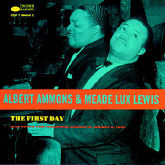
It was in Chicago that a new craze appeared: the "boogie woogie". the ostinato bass of the left hand played the typical blues chords, while the right hand improvised the melodic elements in the treble. The genre had already existed for at least ten years (e.g., Cow Cow Davenport) before it became a sensation (1938), and it has at least three "inventors". Meade Lux Lewis, who was a cab driver for a same Chicago taxi company (so was his friend Albert Ammons) recorded
Honky Tonk Train Blues in 1927, but the song was released only two years later (it imitates the sounds of a train in motion). Jimmy Yancey started recording only in 1939 but was recognized as an influence by the early boogie pianists: his style in
Yancey Stomp (1939),
The Fives (1939) and
State Street Special (1939) was almost purely percussive, while
Slow and Easy Blues (1939) was actually in sixteen bars,
Yancey's Bugle Call (1940) was full of suspense, and
Death Letter Blues (1940) was a heart-wrenching blues. Clarence "Pinetop" Smith lived only 25 years, but, the year before dying, moved to the same apartment with Ammons and Lewis and recorded the archetype:
Pinetop's Boogie Woogie (1928), the first recorded song that referred to the "boogie woogie". Note that boogie woogie emerged during the years of the Prohibition (1920-1933). If the title of inventor is disputed, there is no doubt when boogie woogie became a craze. It was announced by Albert Ammons'
Boogie Woogie Stomp (1936), a cover of
Pinetop's Boogie Woogie recorded with his Rhythm Kings, and by Pete Johnson, who teamed up with Kansas City's vocalist "Big" Joe Turner, the ultimate "shouter", for
Roll 'Em Pete (1938), and then exploded after John Hammond assembled the piano trio of Albert Hammons, Meade Lux Lewis and Pete Johnson at New York's Carnegie Hall in 1938. Lewis penned some of the most sophisticated compositions of the boogie era:
Yancey Special (1936),
Whistlin' Blues (1937),
Cafe Society Rag (1939),
Solitude (1939),
Bear Cat Crawl (1940),
Six Wheel Chaser (1940). Pete Johnson, possibly the least gifted of the group, specialized in catchy numbers, such as
Blues On The Downbeat (1939),
Death Ray Boogie (1939),
Piney Brown Blues (1940), the satori of his interaction with Turner,
Cuttin' the Boogie (1941), one of many duets with Ammons of 1941. Albert Ammons was the most passionate of the trio, for example in the manic
Boogie Woogie Stomp (february 1936) with his Rhythm Kings,
Mecca Flat Blues (1939),
Shout for Joy (1939) and
Bass Going Crazy (1939). Ammons was also one of the first boogie woogie pianists to successful combine this piano style with a band. Clarence Lofton was a Chicago pianist who contributed to expand the horizons of boogie woogie with the haunting
South End Boogie (1943), the intricate
Streamline Train (1939) and the deviant blues of
I Don't Know (1939). Swing bands appropriated the "new" style with Will Bradley's
Beat Me Daddy Eight To The Bar and bandleader Tommy Dorsey's
Boogie Woogie. In Kansas City, the band of pianist Jay McShann, with bluesman Walter Brown on vocals (and the young Charlie Parker on sax), had a huge hit,
Confessin' The Blues (1941), by blending boogie woogie, blues and jazz. Despite the fast pace (that became even faster, louder and more percussive in the 1950s), boogie woogie remained faithful to the blues chord progression. Atlanta's pianist Piano Red (William Perryman) took boogie-woogie into the rock'n'roll era via
Rockin' With Red (1950),
The Wrong Yo Yo (1951) and
Dr Feelgood (1962). Virginia's white pianist James "Roy" Hall acted as the transmission chain between this generation of black boogie pianists and the generation of white rockers. His
Dirty Boogie (1949),
Diggin' the Boogie (1956) and
Whole Lotta Shakin' Goin' On (1956) boasted some of the most manic rhythms of the genre.
 7:23 PM
 Ilham

 Eric Johnson began playing guitar at the age of 11. However Johnson was born into a musically related family and took up playing Piano prior to guitar. Eric Johnson was able to develop his style quickly and studied his influences who at the time included Eric Clapton, Jimi Hendrix, Bob Dylan and Wes Montgomery. At the age of 15 Johnson recorded his first demo tape with his first band which attracted a lot of attention to Johonson's guitar playing from the local music scene. The group soon parted however when the members of the band graduated from school. After school, Eric Johnson became a part of a local fusion band called Electromagnets. Although the music scene was impressed by Johnson's guitar skills, the band were unsuccesful and split 3 years later. During that time however Eric Johnson had managed to gather fans of his playing and decided to form his own group of musicians which included Bill Maddox and Kyle Brock.

 IN the late 1960s, one of the most prominent pieces of graffiti seen in London and New York was "Clapton is God." Thirty years later, the stalwart guitarist and singer continues to hold the initiated enthralled, and a fair share of his present-day fans weren't even born when those words of worship were emblazoned on public edifices. Clapton's meandering and groundbreaking musical career has been punctuated by extreme personal hardship and tragedy. Through the emotional truth of his music, he has sought refuge and release from the suffering of drug and alcohol addiction, personal relationships gone awry, and the deaths of several loved ones.

 In late 1990, the fates delivered Clapton a terrible blow when guitarist Stevie Ray Vaughan and Clapton road crew members Colin Smythe and Nigel Browne--all close friends of Clapton's--were killed in a helicopter crash. A few months later, he was dealt another cruel blow when Conor, his son by Italian model Lori Del Santo, fell forty-nine stories from Del Santo's Manhattan high-rise apartment to his death. Clapton channeled his shattering grief into writing the heart-wrenching 1992 Grammy-winning tribute to his son, "Tears in Heaven." (Clapton received a total of six Grammys that year for the single and for the album Unplugged.)In 1994, he began once again to play traditional blues; the album, From the Cradle, marked a return to raw blues standards, and it hit with critics and fans. The fifty-one-year-old Clapton shows no signs of slowing down: in February of 1997 he picked up Record of the Year and Best Male Pop Vocal Performance Grammys for "Change the World," from the soundtrack of the John Travolta movie Phenomenon. Already a double inductee into the Rock & Roll Hall of Fame as a member of the Yardbirds and Cream, a third nod as a solo artist is an inevitable honor for the legendary guitarist. Until Clapton springs his next album on a waiting world, fans can content themselves with his latest side project, TDF. The band's techno-pedigreed 1997 release, Retail Therapy, represents a marked musical departure from Clapton's blues-rock roots, and he appears on the album with the correspondingly off-the-wall pseudonym "X-Sample."