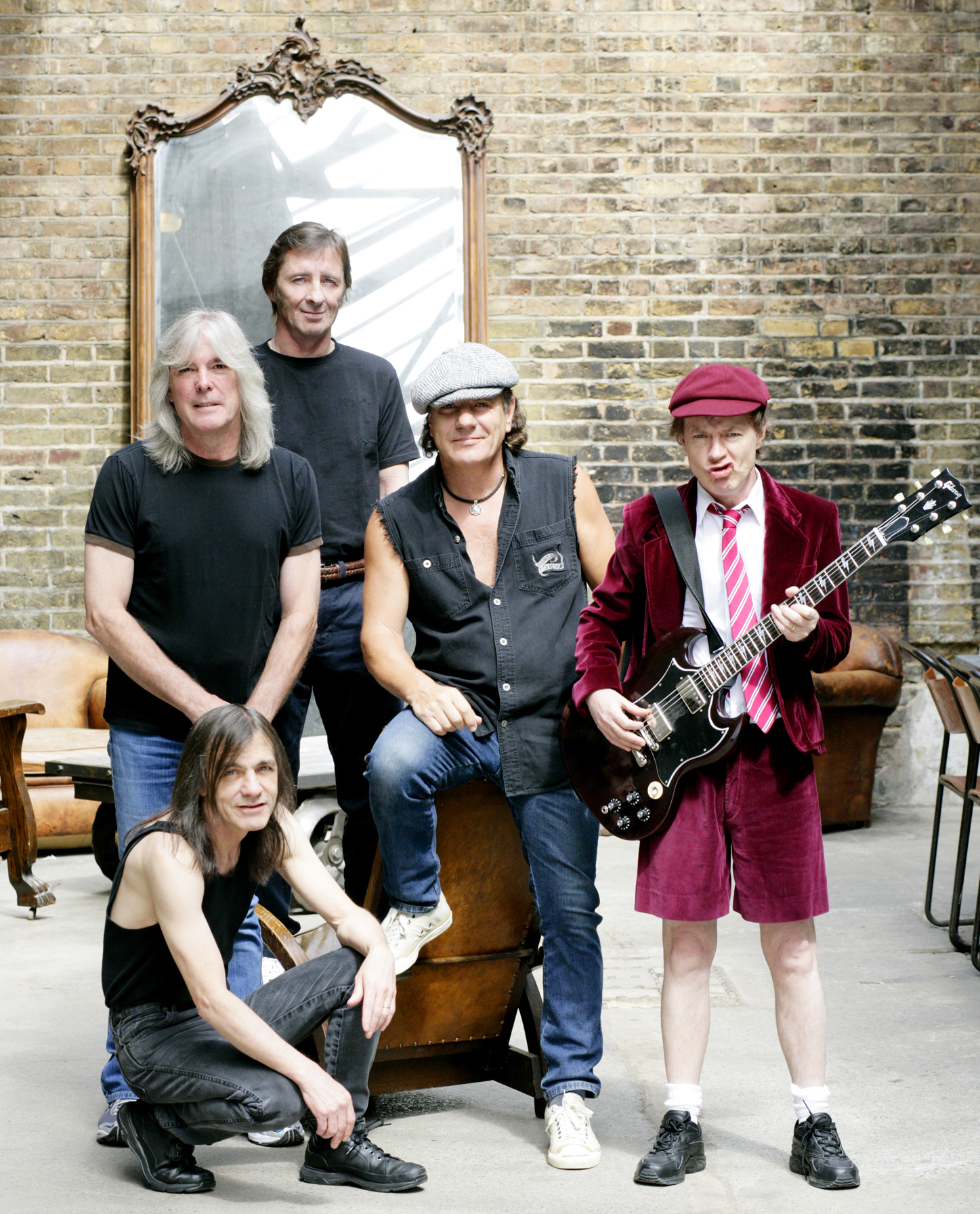
At the start of the new millennium and exactly 35 years since the foundation of Germany’s most successful hard rock band of all time, SCORPIONS Klaus Meine, Rudolf Schenker and Matthias Jabs can look back together on a spectacular career in the international music business.Like many youngsters born in post-war Germany, Klaus Meine and Rudolf Schenker were influenced by the music and other life-enhancing delights imported into their homeland by American GI’s – Elvis Presley, chewing gum, blue jeans and leather jackets, but most of all rock ‘n’ roll. From an early age, both of them had an irresistible urge to grab a guitar and step into the limelight. In the early 1960s the Beatles sparked off the beat revolution. By the mid-1960s Klaus Meine and Rudolf Schenker, both of whom were blessed with understanding parents, had also taken to the stage with their beat groups. In 1965 Rudolf Schenker started up the SCORPIONS in Hanover. Rudolf’s younger brother Michael Schenker was, like Matthias Jabs, smitten by beat music and the burgeoning rock culture. Guitarist and songwriter Rudolf Schenker’s earliest influences were the raw riffs of bands like The Yardbirds, Pretty Things and Spooky Tooth, who in those days were regarded as the real hard rockers.At New Year 1970, the younger Schenker brother Michael, who despite his youth had already established himself as an outstanding guitarist, left the Hanover-based group Copernicus, along with singer and composer Klaus Meine, to join Rudolf Schenker’s SCORPIONS. Rudolf Schenker and Klaus Meine teamed up to form the accomplished Schenker/Meine songwriting duo, so laying the foundations for a spectacular success story.In 1972, the SCORPIONS released their remarkable début album, Lonesome Crow, produced by Conny Plank in Hamburg. The vocal and instrumental ingredients which over the years were to develop into the typical, unmistakable SCORPIONS sound, were already recognisable: uncompromising, guitar-orientated hard rock, on the lines of what Jimmy Hendrix, Cream and Led Zeppelin generated in the mid-1960s. The distinctive SCORPIONS style came from the combination of two electric guitars, a fusion of fabulously forceful power riffs with dazzlingly exuberant guitar solos. Added to which was the instantly recognisable voice of singer and front man Klaus Meine with his highly expressive and polished delivery. In one respect, the SCORPIONS were unique on the German rock scene of the period. Because, right from the start, the band was aiming for the very top of the international hard rock business, Klaus Meine wrote all his lyrics in English. In the creative partnership of Rudolf Schenker and Klaus Meine Germany had finally found its answer to the famous beat and rock composing teams of the English-speaking world.The first album Lonesome Crow set the band on the path to international success. The SCORPIONS toured as support band with Rory Gallagher, Uriah Heep and UFO. Throughout their history Rudolf Schenker has been the unshakeable driving force behind the SCORPIONS. He adopted his father’s philosophy of life – nothing is impossible as long as you believe in it. Right from the foundation of the SCORPIONS, he had only one declared ambition: "one day the SCORPIONS will be one of the best heavy rock bands in the world!" It was an idea to which all the band members were committed. The SCORPIONS were constantly on the lookout for fresh challenges. Every change in the line-up was seen as an opportunity to move closer still to success and the achievement of absolute professionalism.In 1973, following a joint tour with UFO, Michael Schenker joined the British rock group. He was replaced as SCORPIONS lead guitarist by Ulrich Roth. He too was an exceptional guitar player with an almost mystical talent. With Ulrich Roth, the SCORPIONS continued unwaveringly to explore the hard rock genre.In the 1970s, the SCORPIONS undertook tours of Western Europe, playing countless venues and conquering one country after another. They would appear wherever there was somewhere to plug in their instruments. In
1973, they accompanied The Sweet on their first European tour. The SCORPIONS went on to record their next four studio albums with Ulrich Roth. Fly to the Rainbow, (1974) features a solid, high-energy brand of heavy rock never before heard from a German band. The title track Speedy’s Coming typifies the SCORPIONS style of ultra-hard rock combined with catchy melodies. Beginning with their third LP In Trance, (1975), they began their working relationship with well-known international producer Dieter Dierks. They were firmly launched on their hard rock career. In Trance was the best-selling RCA album in Japan, where a regular SCORPION mania broke out.In 1975 the SCORPIONS toured Europe, sharing top billing with KISS. In Germany that same year, they were voted best live group. During their first UK tour in 1975, the SCORPIONS entered what might be called "the lion’s den", playing at Liverpool’s legendary Cavern Club. In the birthplace of hard rock, they succeeded in gaining the acceptance of the most dyed-in-the-wool British fans. Gigs at the renowned London venue, the Marquee, were further highpoints of the mid-1970s.The SCORPIONS achieved their ambition to be the top German hard rock band, when their fourth album Virgin Killer (1976) won the "LP of the Year" award in Germany. In Japan, Virgin Killer gained them their first Gold Disc. Their follow-up album Taken by Force (1977) was also awarded a Japanese Gold Disc. In 1978 the SCORPIONS toured Japan, the world’s second largest music market, where they got a foretaste of what it was like to be superstars. When they arrived at Tokyo airport, the five heavy metal men were mobbed by adoring fans. Ulrich Roth left the band after the 1978 Japanese tour. The highpoint and conclusion of the SCORPIONS’ Ulrich Roth period is the double album Tokyo Tapes (1978) which even now is cherished around the world as a collector’s item. Michael Schenker filled in briefly (he recorded several songs on Lovedrive (1979) until Matthias Jabs finally entered the fray.In 1978 an advertisement appeared in the Melody Maker: the SCORPIONS were looking for a new lead guitarist. In London, they auditioned 140 hopefuls, before deciding on Hanover-born Matthias Jabs. Thrown in at the deep end, Matthias Jabs immediately joined the band in recording Lovedrive (1979) which was then in production. The album was to be the group’s biggest triumph so far, and is still one the SCORPIONS’ best-ever albums. The sleeve received a prize for the best artwork of the year.In 1979, Michael Schenker rejoined the SCORPIONS for a short spell, but left the band while on tour. In 1980, he founded MSG, the Michael Schenker Group. Matthias Jabs once again leapt into the breach and achieved the amazing feat of learning, literally overnight, the entire programme for the current tour. His baptism of fire came when the SCORPIONS played to 55,000 fans as support act for Genesis on their German tour. In Matthias Jabs, the SCORPIONS had finally found the lead guitarist whose creativity, virtuosity and enthusiasm continue to make a decisive contribution to the band’s success. With him, the band achieved an even more solid sound. Like the missing piece in the jigsaw, his guitar style fitted to perfection into the group dynamic, creating the unique SCORPIONS sound. Klaus Meine, Rudolf Schenker and Matthias Jabs still form the musical backbone of the band. With bass man Francis Buchholz (who joined the SCORPIONS in 1973 at the same time as Ulrich Roth) and drummer Herman Rarebell (who first featured on Taken By Force in 1977), they finally established the combination that was to continue its victorious progress across the globe right up until Wind of Change.Already hailed as a super group during the 1978 tour of Japan, in 1979 the band, comprising Klaus Meine, Rudolf Schenker and Matthias Jabs, set out to conquer the vast US market. Their weapons: a professional attitude paired with a steely determination to succeed and a philosophy of friendship, both within the band and towards t heir fans, as well as great musicality. As a rock
band working on the international scene, the SCORPIONS had long since created their own musical identity. In the 1980s, the USA was the biggest market of all for hard and heavy rock. Since 1974, the SCORPIONS had built up a considerable following in the States. Van Halen launched their musical career in the mid-1970s with cover versions of SCORPIONS songs: Speedy’s Coming (from Fly to the Rainbow) and Catch Your Train (from Virgin Killer).In 1979, now professionally managed and boosted by the success of Lovedrive, the SCORPIONS with their definitive line-up – Klaus Meine, Rudolf Schenker and Matthias Jabs – embarked on their first major tour of USA rock arenas as opening act with Aerosmith, Ted Nugent and AC/DC. In Chicago, the SCORPIONS swapped the headliner billing with Ted Nugent, since the SCORPIONS had more fans in the city. On this first American tour, the SCORPIONS quickly learned the rules of the game in the international rock business.Their seventh album Lovedrive was released in the USA in 1979, and was the first SCORPIONS production to receive a Gold Disc there. Animal Magnetism followed in 1980. With the two albums, the band finally made their North American breakthrough. On their second US tour the SCORPIONS were top of the bill. The era of SCORPIONS monster tours had begun.After more successful world tours, in 1981, while recording Blackout, Klaus Meine lost his voice. Not wishing to stand in the way of the band’s success, Klaus Meine wanted to pull out. But the unshakeable friendship between Rudolf Schenker and Klaus Meine and the close and supportive relationship within the band allowed the seemingly impossible to happen. After lengthy vocal retraining and two operations on his vocal chords, Klaus Meine overcame the trauma. And that was not all: in 1982, he re-emerged with a much increased vocal range. One critic wrote: "They have given Klaus Meine metal vocal chords." The band’s decision to stand by their lead singer through this troubled time later proved to be the most crucial the SCORPIONS ever took in the their entire career. It was Klaus Meine who in 1989 composed their smash hit Wind of Change.In 1982, on their second US tour as headliners with Iron Maiden as support act, the SCORPIONS promoted their groundbreaking album Blackout, with Helnwein’s stunning sleeve design. The single No One Like You and the Blackout LP reached the US Top Ten, the LP was voted Best Hard Rock Album of the year and awarded a Platinum Disc. One hit followed another, and in the 1980s the SCORPIONS captured the hearts of hard rock fans around the world.In 1984 the SCORPIONS became the first German hard rock band to play three successive gigs in front of 60,000 fans at New York’s Madison Square Garden. The SCORPIONS had finally scaled the Mount Olympus of rock. With three albums featuring simultaneously in the US charts: Animal Magnetism (1980), Blackout, (1982) and Love at First Sting (1984), the SCORPIONS spent two years on the road playing as headliner or co-headliner at all the big rock festivals that sprang up around the world after Woodstock.The SCORPIONS toured the globe, with a fleet of articulated lorries, Nightliner buses, helicopters, private jets and the inevitable limos. Hanover’s heavy metal band played all the main rock venues in North, Central and South America and Europe. In Asia, they played in Malaysia, Thailand, the Philippines and Japan. This was the golden age of heavy rock.With gigantic stage and light shows and dramatic firework effects, the SCORPIONS unleashed a pyrotechnic display of sound and light. Their relentless energy sent the fans wild. To US audiences, the SCORPIONS, with their polished, hard-edged "melodic rock" and Klaus Meine’s dramatic power singing with its dizzying top notes, came to epitomise the best in heavy rock. Groups like Bon Jovi, Metallica, Iron Maiden and Def Leppard, later to become mega bands, were support acts on the SCORPIONS’ worldwide tours, learning what it meant for a band to hold its own in the rock arena in front of an audience of millions. Love at First
Sting became one of the most successful albums in rock history. It includes the SCORPIONS’ most electrifying numbers Rock You Like a Hurricane, Bad Boys Running Wild, and the masterpiece Still Loving You. The critics struggled for superlatives.Rolling Stone called the SCOPRIONS "the heroes of heavy metal". The SCORPIONS were admitted to the exclusive club of the world’s 30 greatest rock groups. Their ballad Still Loving You became an international rock anthem. In France alone, the single sold 1.7 million copies. The song unleashed a wave of hysteria among French fans not seen since the Beatles and became the SCORPIONS’ musical trademark around the globe.The SCORPIONS’ most memorable appearances as headliners were at the 1983 US Festival in California’s San Bernadino Valley in front of an audience of 325,000 and at the first Rock in Rio in 1985 where they were cheered by 350,000 enthusisatic South American SCORPIONS fans. The 1985 double album World Wide Live, a counterpart to the 1978 Tokyo Tapes, impressively documented the band’s more recent international triumphs.In 1986, the SCORPIONS topped the bill at the legendary Monsters of Rock Festival and played in the Hungarian capital Budapest, their first-ever appearance in an Eastern Block country. By now the SCORPIONS were a household name, with hard rock hits like Rock You Like a Hurricane, No One Like You, Blackout, Big City Nights, Dynamite, Bad Boys Running Wild, Coast to Coast and The Zoo featuring in the charts around the world. In the 1980s, the SCORPIONS created a kind of modern hard rock that is just as popular today.Their authentic power rock ballads, such as Still Loving You, Holiday and later Wind of Change, Send Me an Angel, When You Came Into My Life and You and I, along with acoustic based songs such as Always Somewhere and When the Smoke is Going Down have managed to win over even the most unyielding haters of hard rock Savage Amusement, the last album co-produced with Dieter Dierks, was released in 1988. It reached N° 3 in the US chart and N° 1 in Europe. Even after years of touring the USA and the rest of the world, the SCORPIONS did not rest on their laurels and continued to seek out fresh challenges.As a prelude to their 1988 Savage Amusement world tour, they penetrated the Iron Curtain to give 10 sell-out concerts in Leningrad for 350,000 Soviet fans. They were the first international hard rock band to play in the former USSR, cradle of Communism. Hard rock, heavy metal and especially the SCORPIONS’ ballad Still Loving You had already found their way through the Iron Curtain. The SCORPIONS are still given a rapturous reception in Russia today.A year later, in August 1989, 20 years after Woodstock, the Soviet authorities, encouraged by the success of the SCORPIONS’ 1988 Leningrad concert, gave permission for the legendary Moscow Music Peace Festival. Here, the SCORPIONS shared the stage with other international hard rock acts, including Bon Jovi, Mötley Crüe, Skid Row, Cinderella and Ozzy Osbourne and the Russian band Gorky Park playing to 260,000 Soviet rock fans in Moscow’s Lenin Stadium. In September 1989 Klaus Meine drew on his impressions of the Moscow Music Peace Festival, to create the SCORPIONS’ smash hit Wind of Change.Then, in November 1989, came a completely unexpected event. The fall of the Berlin Wall. Throughout the world, Wind of Change became the hymn to glasnost and perestroika, providing the soundtrack to the opening of the Iron Curtain, the fall of Communism and the end of the Cold War. One year later, in 1990, the SCORPIONS played in Potsdamer Platz where a section of the Wall once stood, in Roger Waters’s spectacular production, The Wall.The SCORPIONS recorded a Russian version of Wind of Change. They also gained a distinguished fan. In 1991, the members of the German band were invited to the Kremlin to meet Mikhail Gorbachev, the last Soviet head of state and party leader. It was a unique event in the history of the USSR and rock music.worldwide mega seller the Wind of Ch ange CD, Crazy World (1990), their long relation
ship with Dieter Dierks, the Cologne-based producer of so many successful recordings, came to an end. The very first album to be produced by the SCORPIONS themselves, Crazy World, made in Los Angeles, co-produced by Keith Olsen and featuring the smash hit Wind of Change, immediately became the most successful CD to date. Not only was Crazy World the most successful album, Wind of Change was the worldwide top single of 1991, occupying the N° 1 slot in 11 countries. In 1992, they received the World Music Award as the most successful German rock act.Crazy World is impressive testimony to the songwriting talents of the SCORPIONS’ masterminds: Matthias Jabs’s contribution is the dynamic title track Tease Me, Please Me, while Rudolf Schenker once again proves his ability to hit the spot with his classic SCORPIONS ballad, Send Me an Angel, and Klaus Meine displays his brilliance as a composer in Wind of Change. At the end of the 1992 Crazy World tour, the SCORPIONS parted company with their long-time bass player Francis Buchholz. The 1993 CD Face the Heat (co-producer: Bruce Fairbairn), featured the band’s new bass man, conservatoire graduate Ralph Rieckermann.In 1994 the SCORPIONS again received a World Music Award. Yet another high point of their career came when, at the invitation of the family of the "King of Rock ‘n’ Roll", Priscilla and Lisa Marie Presley, and the "King of Pop", Michael Jackson, they performed their cover version of His Latest Flame at the 1994 Elvis Presley Memorial Concert in Memphis, Tennessee. In the same year the SCORPIONS committed themselves to helping United Nations efforts on behalf of refugees from the civil war in Rwanda. In only one week the band produced and released their benefit single White Dove.At the end of 1995, just before completing the Pure Instinct CD, co-produced by Keith Olsen and Erwin Musper and released in 1996, the SCORPIONS’ veteran drummer and long-time companion Herman "The German" Rarebell left the band.During the 1988 Savage Amusement tour, the US heavy metal band Kingdom Come, whose producer was Keith Olsen, had been a warm up act for the SCORPIONS. Even then, the Germans were impressed by the style of the group’s Californian drummer James Kottak. In 1995 the SCORPIONS engaged former AC/DC manager Stewart Young¸ and it fell to him to call James Kottak on the phone and hire him as drummer for the upcoming 1996/97 Pure Instinct Live Tour. James Kottak became the first American to play in the German rock band. With the two new members, bass player Ralph Rieckermann and drummer James Kottak, the SCORPIONS had introduced a new generation of musicians into the group.On the Pure Instinct world tour, the SCORPIONS proved that they were still among the global players on the international rock scene. Not only did they play in Europe, the USA and South America. In countries like Malaysia, Thailand and the Philippines, they continued to notch up well above average record sales and collect gold and platinum discs. In November 1996, the SCORPIONS were the first international hard rock band to play to fans in Beirut after the end of the civil war in Lebanon.On the 1999 recording of Eye to Eye, produced by Peter Wolf, James Kottak worked in the studio with the SCORPIONS for the first time. The cover of Eye to Eye marked a change of image for the SCORPIONS. Only the founder members of the band, Rudolf Schenker, Klaus Meine and Matthias Jabs feature on the front cover. The album itself is a statement of the SCORPIONS’ awesome talents as songwriters and instrumentalists. Songs like Mysterious, Mind Like a Tree, Eye to Eye, Yellow Butterfly and A Moment in a Million Years show the band at the pinnacle of their creativity. With Du Bist So Schmutzig (You’re So Dirty), the SCORPIONS are heard for the first time singing a German lyric. As part of their 1999 Eye to Eye world tour, at the invitation of Michael Jackson, they played at the Michael Jackson and Friends benefit concert in Munich.True to their motto "Don’t stop at the top" the S CORPIONS are starting the new millennium with a
new musical challenge: a crossover project with the internationally renowned classical orchestra, the Berlin Philharmonic, once conducted by the great Herbert von Karajan.In 1995, the Berlin Philharmonic was exploring the possibility of a crossover project and was on the lookout for a suitable band. Over the years even this classical orchestra had been aware of the SCORPIONS' success and international reputation. The two Mercedes of German music agreed on a joint venture under the direction of the internationally successful crossover producer, composer, conductor and arranger, Austria’s Christian Kolonovits. As early as 1995 the SCORPIONS began their preparations. Since then, both groups of musicians have continued to working on the project, while still fulfilling current engagements around the world and bearing in mind the timing of EXPO 2000 in Hanover. After the release of the Eye to Eye CD in 1999 and the subsequent world tour, the SCORPIONS got down to serious business in the autumn of the same year.The SCORPIONS gave a foretaste of what is to come when, at the invitation of the German government, they played in front of Berlin’s Brandenburg Gate on 11 November 1999, the 10th anniversary of German reunification. Joining them in their performance of Wind of Change were 166 cellists. The work was conducted by the distinguished cello virtuoso Mstislav Rostropovich. In January 2000, the SCORPIONS and Christian Kolonovits began studio recordings in Vienna. The Berlin Philharmonic recorded the orchestral parts in April 2000. The complete work was mixed during April and May 2000 at the Galaxy Studios in Belgium, using the state-of-the-art Surround System Atmos 5.1.The crossover CD Moment of Glory, featuring the SCORPIONS with the Berlin Philharmonic Orchestra, was released on 19 June 2000. The first live performance took place at EXPO in Hanover on 22 June 2000. The album also includes the official EXPO anthem Moment of Glory.The enthusiasm and open-mindedness of the SCORPIONS with regard to their flirt with the classic-genre was not finished by any means. In February 2001 the band performed three concerts in a portuguese monastery. These concerts served as a basis for the new album Acoustica. The unusual choice of the recording location also pointed out the musical development of the extraordinary musicians: For the first time in their career the SCORPIONS did their performance without electric instruments to the greatest possible extent. Klaus Meine's voice sounds pure and unadulterated rocking, together with Matthias Jabs and Rudolf Schenker playing their acoustic guitars. The recordings of the SCORPIONS in Portugal, together with some very special guest musicians belong to the greatest milestones in rock history. Not only the single "When love kills love", that was released on April 30, 2001, shows the outstanding quality of the SCORPIONS as performers and songwriters.The album Acoustica, that was released on May 14, 2001 contains real treasures: Besides four completely new titles, the greatest classics as "The zoo" and "Hurricane" show themselves in a new acoustic sound and impress as well as the brilliantly arranged cover-versions of bands like Queen or Kansas. 30 years in the rock 'n' roll circus did not stop the band from exploring different projects in a refreshing, intelligent way. With the upswing of hardrock worldwide it was time to go back to where the band came from and to team up again with Dieter Dierks, the man who had played such an important part in the Scorpions' history, producing many of those multi platinum albums in the 70s and 80s. There are two new songs that were specially recorded for this album. Bad for Good, is a new recording combining the classic Scorpions' style with a new arrangement. Cause I Love You, is a typical Scorpions' Rocker about a love affair with a guitar. The next studio album won't be ready for a summer release, but the Scorpions have nevertheless booked an extensive co-headlining American tour with Deep Purple in summer 2002, with Ronnie James Dio in support. A brief hiatus in July, the same year, will allow the band to perform additional symphonic shows in Europe, including an appearance in Luxembourg at the start of the Tour de France.
Reflecting on past accomplishments, the band feels fortunate to have been part of music history and participate in memorable shows. Headlining the biggest festivals in Europe from 1978. The "US"-Festival, Rock in Rio, the Monsters of Rock Tour with Van Halen and Metallica in 1988, Pink Floyd's The Wall in Berlin 1990, the many performances associated with "Wind of Change. " The biggest audience, an amazing 750.000 fans, came to see the Scorpions rock Poland in 2000. But according to their motto "Don't Stop At The Top" the band feels that there is always more to accomplish. "There are still some places we haven't been" says guitarist Matthias Jabs. "Who knows? This year we may go to China!" As for other wishes, "It would be great if we could stay at the top in America and Europe," says Rudolf Schenker, but he is not ungrateful for the level of success the Scorpions have already achieved. "To be able to play our music for people all over the world makes us feel so good.We're happy right now. " He can't conjecture how many more years the Scorpions have in their future, but he's sure they will make the most of their present."The biggest challenge for us is to come up with a great rock record that will be an album in the best Scorpions tradition", vowing to continue as long as they have fun and the passion for performing motivates them.
Klaus Meine surmises that the Scorpions will be remembered for that above all.
 7:37 PM
 Ilham
Ilham